Image: Audi AG / Audi Romania, official press image.
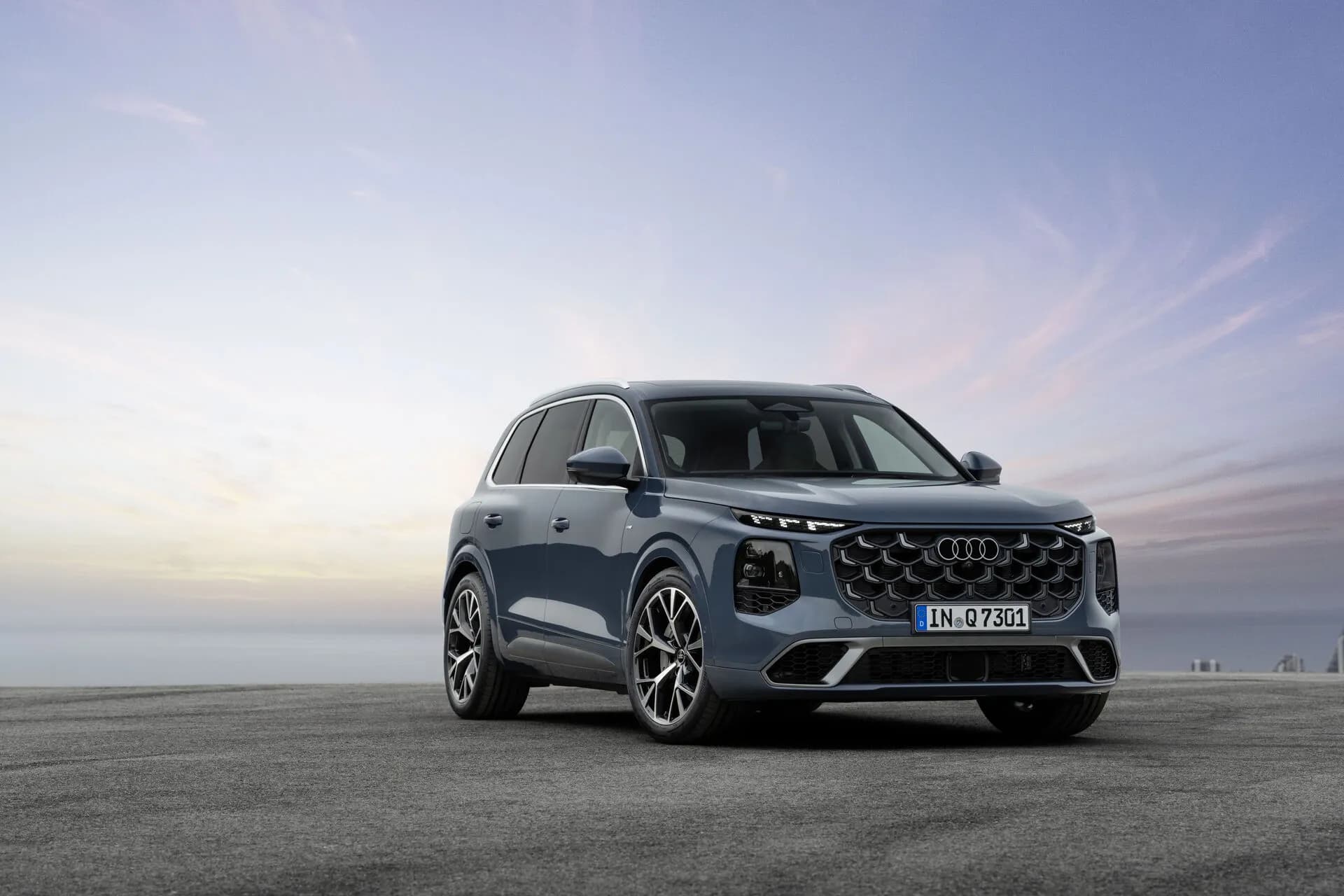
Audi has presented the third-generation Q7 in Romania. The large SUV can be ordered with five, six or seven seats and launches locally with a 3.0-litre V6 diesel in two power outputs. Both versions use Audi’s MHEV plus system, an eight-speed tiptronic gearbox and permanent quattro all-wheel drive.
Audi Romania’s local presentation page lists a recommended price of €120,273 including VAT for the 220 kW Q7 TDI quattro. The importer states that the final selling price is set by the dealer and can change with equipment and commercial terms. Promotor reported lower starting figures for a basic Romanian configuration, so buyers should compare like-for-like specifications rather than treating a single headline price as universal.
Two V6 diesel outputs
The entry engine produces 180 kW, or 245 PS, and 500 Nm. The stronger version develops 220 kW, 299 PS and 630 Nm. Both use a powertrain generator and a lithium-iron-phosphate battery as part of the MHEV plus architecture. Audi says the generator can add up to 18 kW and 370 Nm for short periods during pull-away and acceleration.
The system can also allow short periods of partly electric driving when manoeuvring, parking or moving through urban traffic. This is not a plug-in hybrid and Audi does not quote a separate everyday electric range for the diesel Q7. The system is intended to support the combustion engine, recover energy and reduce fuel use in situations where the engine can be switched off.
An electrically driven compressor supports throttle response. Audi says it can reach 90,000 rpm in 250 milliseconds and generate up to 3.4 bar absolute boost pressure. These are manufacturer figures, not Carboratory measurements. Audi also lists HVO compatibility and says the fuel can cut CO2 emissions by up to 70–95% compared with fossil diesel, although the result depends on feedstock and calculation method.
quattro and the suspension choices
Permanent quattro is paired with an eight-speed tiptronic transmission and a new preloaded limited-slip centre differential. Audi says the arrangement improves traction and steering response when the load changes quickly. Standard suspension uses steel springs. Adaptive air suspension and adaptive air suspension sport are available options.
The sport air suspension lowers the body by 30 mm. The air systems can compensate for vehicle load and maintain the body position. Integral steering is also available depending on specification: at low speeds it can reduce the turning circle, while at higher speeds it can support stability. Equipment is not identical on every Romanian car, so the order sheet matters.
Five, six or seven seats
Five seats are standard. Two optional individual seats in the second row can create a six-seat layout together with the third row. A seven-seat version remains available for buyers who need maximum passenger capacity and the possibility of fitting up to three child seats.
Audi quotes up to 806 litres of luggage capacity in the five-seat layout and up to 2,075 litres with the second row folded. The seven-seat version offers up to 722 litres behind the second row and up to 1,980 litres with the rear seats folded. The figures depend on seat positions and are not directly comparable unless the same layout is used.
Panoramic roof, audio and lighting
The top equipment level can include an illuminated panoramic roof with adjustable transparency. Audi says its laminated glass reflects infrared radiation and blocks more than 99.5% of ultraviolet radiation. The transparent areas can be adjusted individually, removing the need for a conventional blind.
An optional Bang & Olufsen 4D sound system uses 22 speakers and up to 1,360 watts. Actuators in the front seats add vibrations synchronised with the music, while the user can adjust the intensity or disable the feature. This is an equipment description, not an independent audio test.
Optional digital Matrix LED headlights use micro-LED modules. Third-generation digital OLED rear lights can show digital signatures and communication functions. Audi offers up to eight digital light signatures depending on equipment. The Q7 can also project light onto the ground during some signalling situations, helping to make a lane change or turn more visible to nearby road users.
Assistance and parking functions
Adaptive driving assistant plus can support acceleration, braking, speed, distance and lane keeping. The driver remains responsible for monitoring the road and the vehicle. The system is not an autonomous-driving approval.
Trained parking can store up to five manoeuvres, each up to 200 metres long. Reverse assist can follow a memorised route of about 50 metres at up to 10 km/h. Park assist plus and four wide-angle cameras help with tight spaces, but the driver must still control and supervise the manoeuvre.
Local availability and pricing context
Audi Romania advertises a €5,000 anniversary card for the first 50 Q7 vehicles sold, usable under the campaign terms for warranty, accessories or servicing. The local page says the offer is available until 31 October 2026, subject to stock and conditions.
The Q7 is built in Bratislava, as were the previous two generations. Audi quotes provisional WLTP combined fuel consumption of 7.1–8.0 l/100 km and CO2 emissions of 186–209 g/km, depending on configuration. These values are official test figures and should not be treated as a promise for every journey.
For a Romanian buyer, the useful checklist is the exact output, seat layout, standard equipment, delivery date, finance cost, warranty and final VAT-inclusive price. A dealer quote around €88,000, a recommended price shown on an importer website and a heavily equipped demonstration car may all describe different specifications. The new Q7 is therefore best judged from a complete written offer.