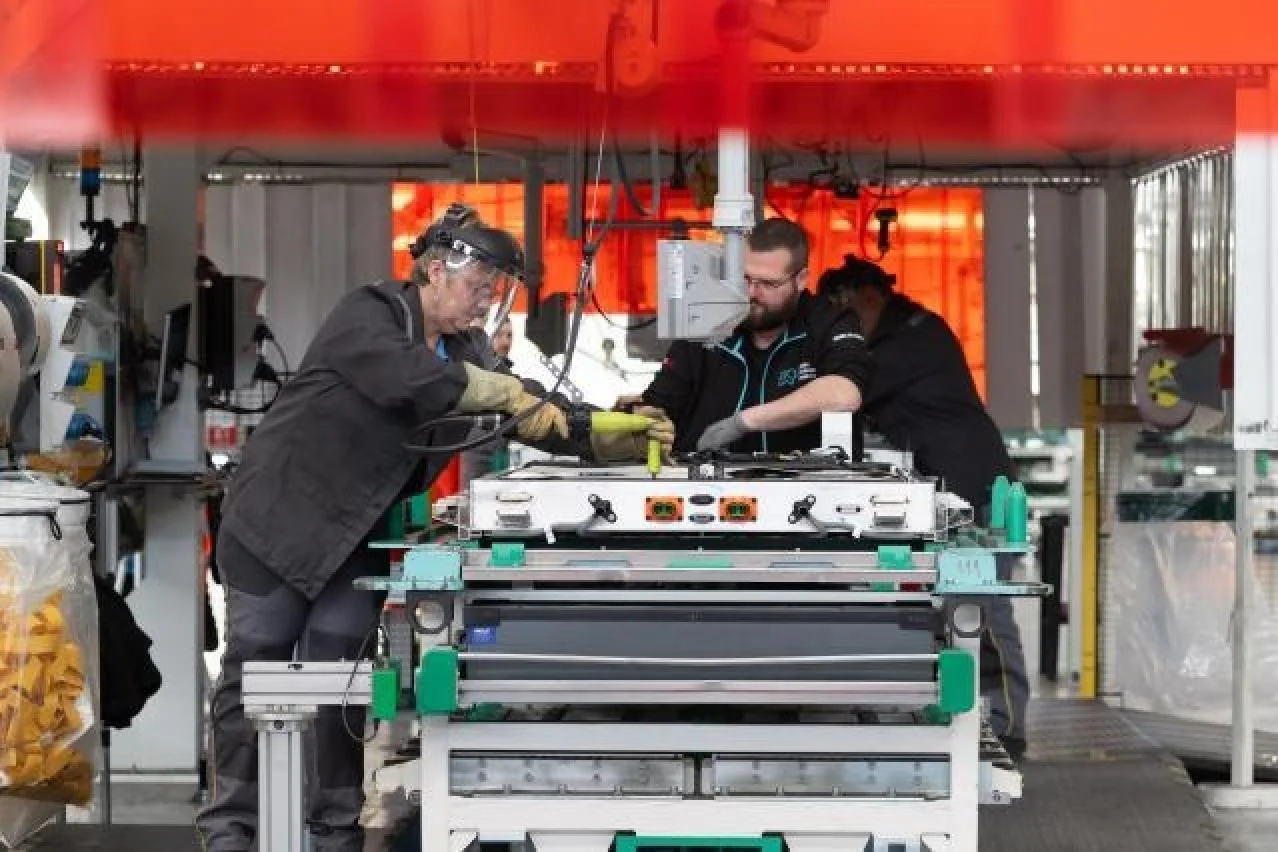
Electric-car production in France. Official European Commission image published with the Automotive Package.
EU governments reopen the 2035 car emissions deal
European Union governments are still negotiating how far new-car CO₂ emissions must fall in 2035. The binding rule remains a 100 per cent reduction from the 2021 fleet reference, but three competing approaches are now in play: the European Commission proposes 90 per cent with compensation for the remainder, France and Germany support 90 per cent with broader flexibility, and the European Parliament's environment committee has backed 87.5 per cent for passenger cars.
None of those newer positions is final law. The Council, representing member states, has yet to settle its mandate. Parliament must confirm its negotiating position in plenary, after which the two institutions must agree on one text. Describing the combustion-engine phase-out as already cancelled therefore goes beyond what the legislative record supports.
What the law says today
Regulation (EU) 2023/851 set a 100 per cent reduction target for average CO₂ emissions from new passenger cars and vans registered from 2035, compared with the 2021 reference. It operates at manufacturer-fleet level. It does not order owners to scrap existing petrol or diesel cars, prevent used-car transactions or prohibit fuel sales.
The distinction matters. A fleet target determines the mix a manufacturer can sell without exceeding its specific emissions limit. It is not a direct ban written against each individual combustion engine. In practice, a 100 per cent tailpipe reduction pushes new sales towards zero-emission vehicles, apart from any narrowly defined exceptions created elsewhere in the rules.
The current argument is about replacing that target before it takes effect. It also covers the accounting tools available to manufacturers, including credits for materials and fuels and extra weighting for selected electric cars.
The Commission's 90 per cent proposal
The Commission presented its Automotive Package on 16 December 2025. It proposes lowering the 2035 tailpipe reduction requirement to 90 per cent. The remaining ten percentage points would have to be compensated through eligible renewable fuels and low-carbon steel made in the EU. The package also aims to support European battery production and offers favourable accounting treatment for certain small electric vehicles.
Compensation is central to that design. The proposal does not simply forgive the final ten per cent; it creates a mechanism intended to balance it with lower emissions elsewhere in the vehicle and fuel value chain. The precise eligibility, verification and caps attached to those credits will determine how much practical room manufacturers receive.
This is a Commission proposal under the ordinary legislative procedure. It needs approval from both Parliament and the Council and can change substantially during negotiations.
France and Germany want a different balance
France and Germany announced a joint political approach on 16 October 2026. Their public statement combines continued decarbonisation with technology neutrality, alternative fuels, European production and investment incentives. The governments support a 90 per cent reduction while seeking more freedom over how the remaining share is handled.
The Franco-German text is politically influential because both countries host large carmaking and supplier operations. It is not a Council position and does not amend EU law by itself. Other governments are challenging elements of the compromise as Ireland, holding the rotating Council presidency, works on a draft mandate.
The disagreement extends beyond one headline number. Member states must decide whether all residual emissions need compensation, which fuels qualify, how European low-carbon steel is traced, and whether incentives favour locally produced electric vehicles without creating unworkable trade or state-aid effects.
Parliament's committee chose 87.5 per cent
On 4 November, Parliament's Environment, Climate and Food Safety Committee adopted its negotiating position by 48 votes to 30, with two abstentions. It supported an 87.5 per cent reduction target for new passenger cars in 2035. Its approach also includes low-carbon steel credits and multipliers for some small or particularly efficient electric cars produced in the EU.
That committee vote is not the end of Parliament's first reading. The Legislative Observatory lists the file as 2025/0420(COD), with a plenary step still required. Only after Parliament has a mandate can detailed interinstitutional negotiations settle the final percentages and compliance rules.
The different figures should not be added together. They are rival negotiating positions: 100 per cent in the current regulation, 90 per cent in the Commission proposal, a politically distinct Franco-German 90 per cent approach, and 87.5 per cent in the parliamentary committee text.
What could still be sold after 2035
A lower fleet target could leave limited room for plug-in hybrids, range-extender vehicles or combustion models using fuels recognised by the final regulation. It is not possible to translate a 90 or 87.5 per cent target directly into the same percentage of combustion-car sales. The result depends on each model's certified emissions, the manufacturer's sales mix and the number and type of credits allowed.
Nor is there a confirmed list of post-2035 models. Carmakers will make product decisions only after the compliance formula, penalties and market demand are clearer. A manufacturer with a very high battery-electric share could have different options from one selling heavier or higher-emitting vehicles.
For buyers, the negotiation does not alter the legality of a car bought today. Its effects concern future new-car supply, investment and pricing. National taxes, low-emission zones and local registration policies remain separate questions and can affect ownership before or after 2035 independently of this EU fleet standard.
The next legal steps
The Council needs a qualified-majority position among member states. Parliament needs its plenary mandate. Negotiators then seek a common version in talks between Parliament, Council and Commission, followed by formal adoption and publication in the Official Journal.
Until those stages are complete, the 100 per cent reduction remains the legal reference. The Commission package, the Franco-German agreement and the ENVI vote show that a softer target is increasingly plausible, but they do not establish its final form. The most consequential unresolved issue may be less the gap between 90 and 87.5 per cent than the rules for compensation: without clear limits and verification, the same headline percentage could produce very different market outcomes.