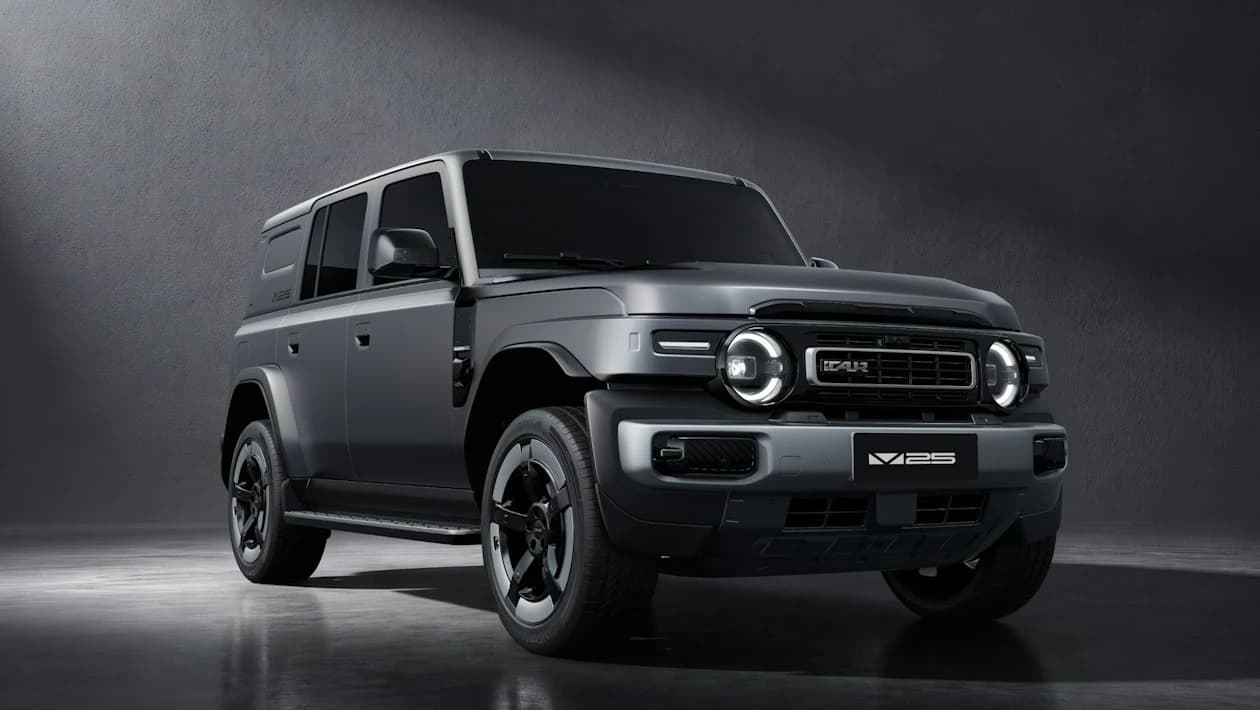
Chery’s iCAUR brand has revealed the V25, a boxy five-seat SUV positioned between the smaller V23 and the larger V27. The model combines a traditional off-road-inspired shape with a range-extender electric powertrain. A Chinese regulatory filing describes a 33.679 kWh LFP battery, up to 150 km of WLTC electric range and a towing capacity of up to 1,800 kg when the approved towing package is fitted.
The V25 is also expected to be offered as a battery-electric vehicle, but iCAUR has not published the complete specification of that version. The company’s international plans remain market-dependent. iCAUR Australia says the V25 is expected to arrive there in 2027, while the brand has not confirmed UK plans for the model. The UK will receive the larger V27 first, according to the information quoted by Auto Express.
A square body between the V23 and V27
The V25 measures 4,636 mm long, 1,920 mm wide and 1,855 mm tall, with a 2,820 mm wheelbase. The vehicle has two rows and seating for five. These figures come from Chinese regulatory information and describe a unibody SUV rather than a body-on-frame off-roader.
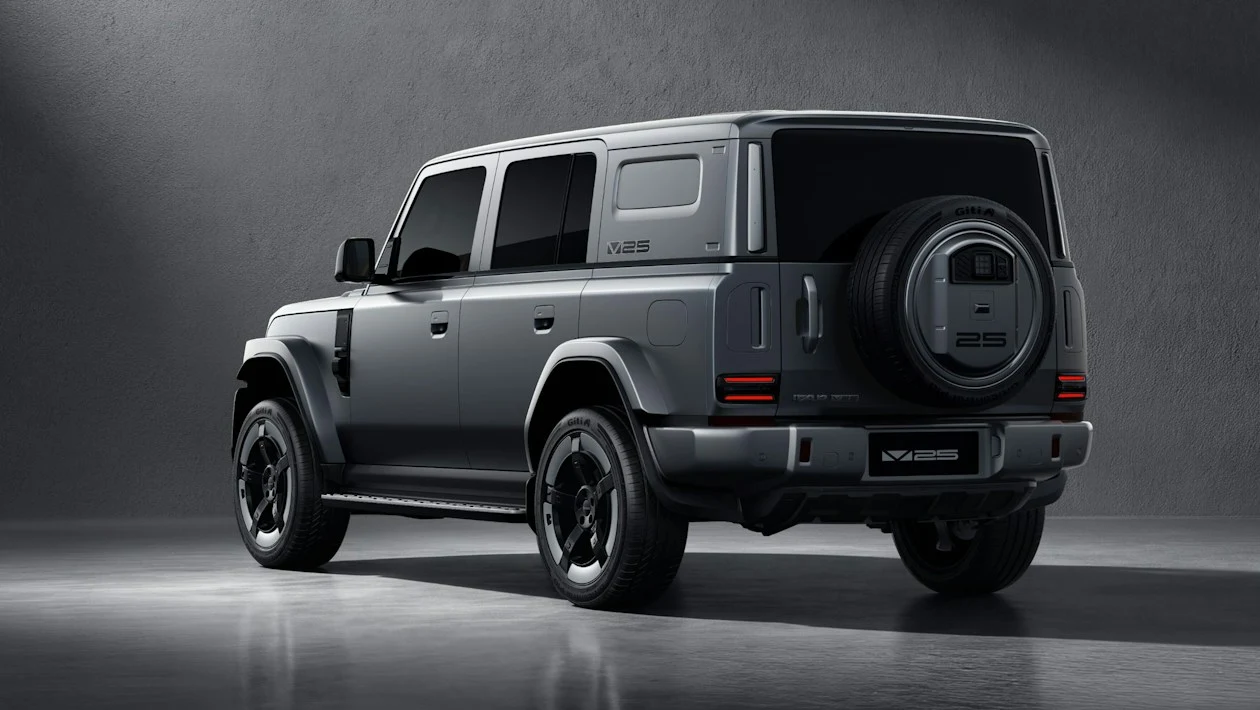
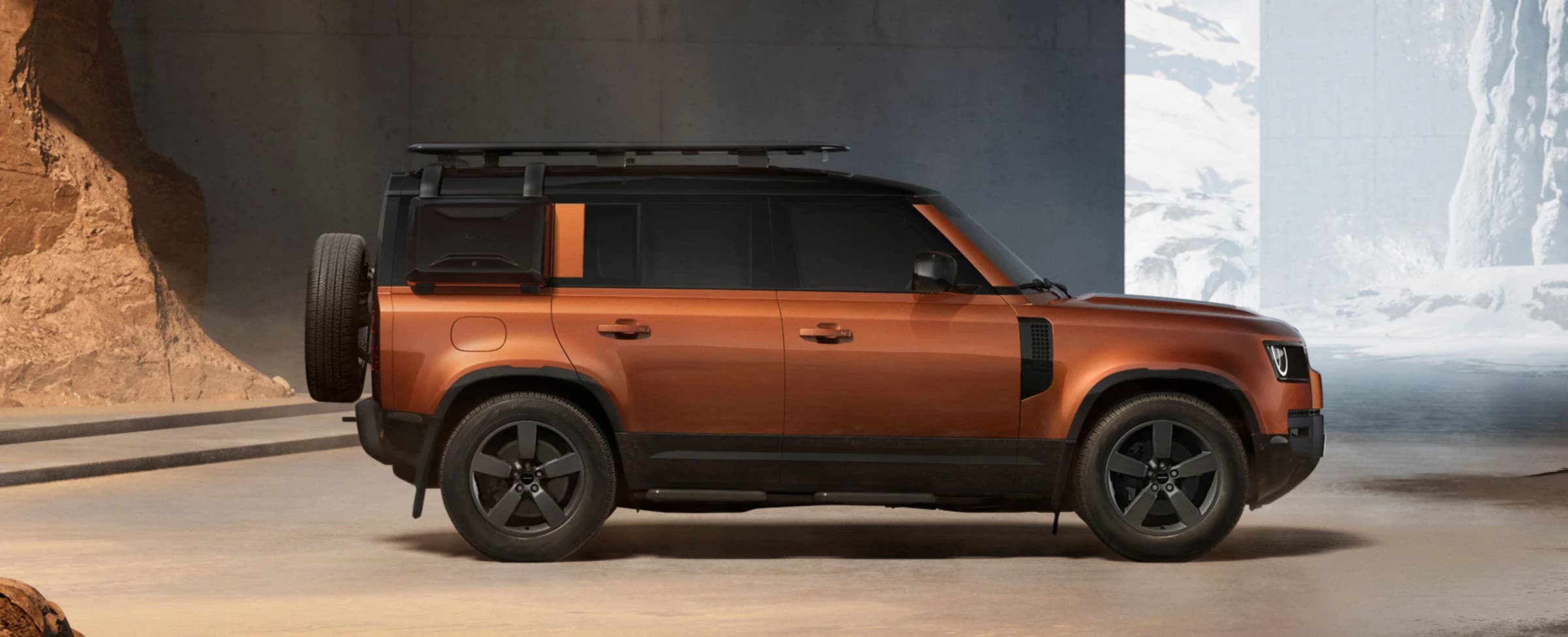
Its styling uses round headlamps, a flat roof, a near-vertical windscreen and short overhangs. A full-size spare wheel is mounted on the side-opening tailgate. The visual references to classic off-road vehicles are clear, which explains the comparisons with the Land Rover Defender and Jeep Wrangler in British coverage. Those comparisons describe the appearance, not the construction or the vehicle’s confirmed off-road ability.
The Chinese filing lists a 28-degree approach angle and a 24-degree departure angle without the towing equipment. With the tow package installed, the departure angle falls to 15 degrees. The V25 can use 19- or 21-inch wheels depending on specification. The maximum certified towing capacity is 1,800 kg, but the final towing equipment and limits may vary by market.
A petrol engine used as a generator
The best-documented powertrain is an extended-range electric system. The 1.5-litre petrol engine is not described as mechanically driving the wheels. Instead, it acts primarily as a generator for the LFP battery and electric drive system.
The battery has a nominal capacity of 33.679 kWh and is listed with Gotion High-Tech as the cell supplier in the Chinese regulatory material. Depending on the configuration, the pure-electric WLTC range is reported as either 145 or 150 km. The same documentation gives a WLTC fuel-consumption figure between 1.52 and 1.54 litres per 100 km. These are figures for the Chinese specification and test context, not confirmed European figures.
The generator produces 115 kW, while the maximum net engine output is listed as 105 kW. The V25’s stated top speed is 180 km/h. Complete output figures for the electric motors and a single combined power figure have not been published for every version. iCAUR has separately announced a BEV variant, but its battery, range and charging information are still to be confirmed.
Physical controls inside the cabin
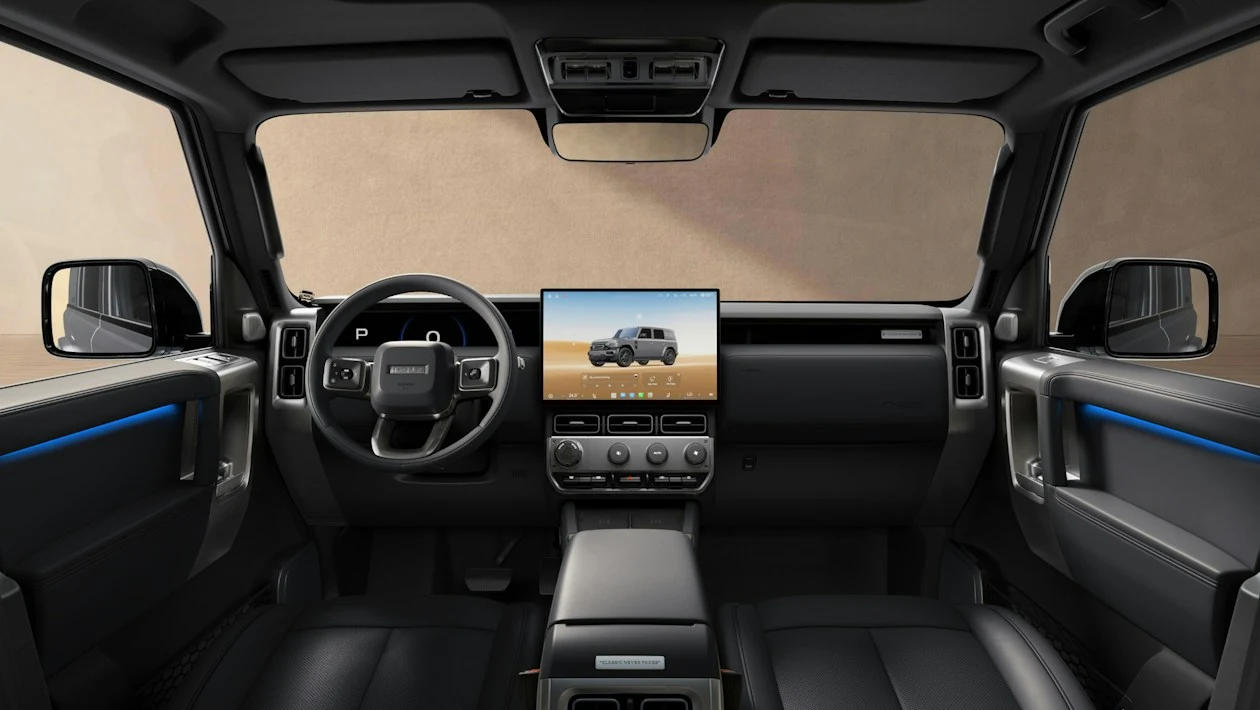
The official images show an upright dashboard with a digital instrument display behind the steering wheel and a large central touchscreen. Three air vents sit below the screen, followed by physical switches and rotary controls for the climate system. That layout is notable because it leaves several frequently used functions outside the touchscreen menus.
The gear selector is mounted behind the steering wheel. The centre console includes phone-storage areas and cup holders, while the rear bench provides three seats. iCAUR describes the cabin as suitable for different lifestyles, including camping, cycling and outdoor trips. It has not yet published a complete international equipment list or a final luggage-volume figure for every market.
Some Chinese versions can be equipped with a roof-mounted LiDAR sensor. The regulatory material lists it as an option, so it should not be assumed that every V25 will have the sensor or that it will be offered in every country. The same distinction applies to driver-assistance functions, wheel sizes and charging specifications.
International availability is still open
In the UK, the V27 is expected to be the first iCAUR model to arrive, with an early-2027 launch referenced by Auto Express. iCAUR has said that plans for the V25 in Britain have not yet been confirmed. There is therefore no confirmed UK or EU price, no Romanian launch date and no final European specification at this stage.
The official Australian website gives an expected 2027 arrival for the V25 but warns that the shown specifications are pre-production and subject to Australian Design Rule approval. It also says that range and consumption figures for Australia will be published after the relevant testing. This is why the Chinese regulatory numbers should be presented as market-specific figures rather than as a universal specification.
The V25 is aimed at a practical middle ground: an upright SUV with an electric drive system for daily use and a petrol generator for longer journeys. A 145–150 km electric range could cover many daily commutes when regular charging is available, while the range extender reduces dependence on public charging during longer trips. Real-world usefulness will depend on the charging system, fuel consumption under load and the final calibration for each market.
The towing figure is also useful context. A certified 1,800 kg limit gives the V25 a clear practical role, but fitting the tow hardware changes the departure angle and adds weight. The car is not automatically equivalent to a dedicated ladder-frame 4x4 simply because it carries a spare wheel and has a square silhouette.
For now, the iCAUR V25 is a revealed model with partial technical data and an unconfirmed European future. Its design is easy to recognise, but price, homologation, total electric-motor output and final equipment will determine whether it can become a serious alternative to established compact and mid-size SUVs.