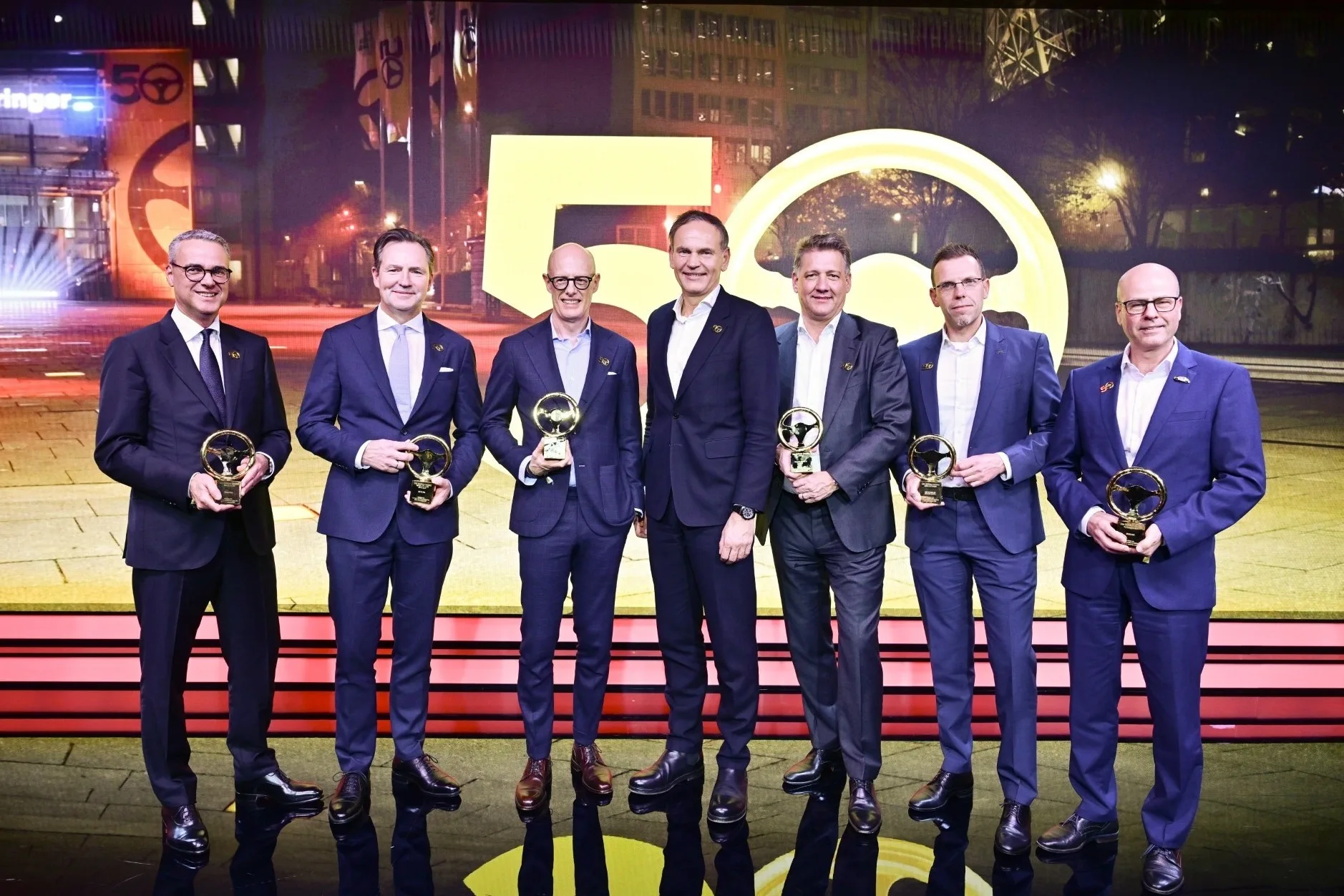
Mercedes-Benz will add a more comfort-focused model to the SL family in 2027, creating a third character alongside the performance-led Mercedes-AMG SL and the luxury-focused Mercedes-Maybach SL. Mercedes-Benz Group chief executive Ola Källenius confirmed the plan in an Auto Bild interview after arriving at the Golden Steering Wheel ceremony in Berlin in a camouflaged prototype.
The confirmation is about positioning rather than hardware. Mercedes-Benz has not disclosed the engine, output, price, exact reveal date or sales markets. When asked whether the car would use six cylinders, eight cylinders, electric power or a hybrid system, Källenius did not specify. None of those possibilities can therefore be presented as confirmed.
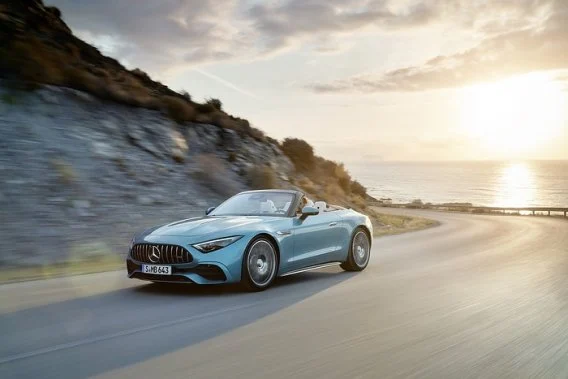
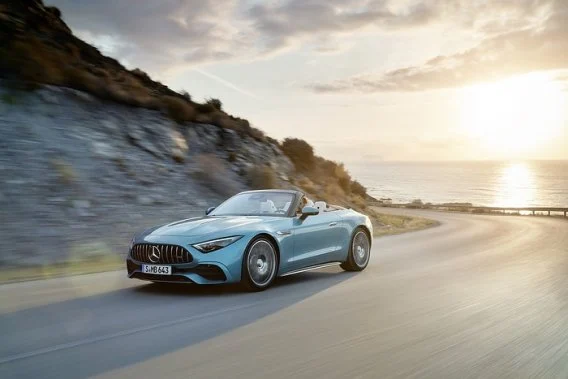
The current Mercedes-AMG SL, not the undisguised 2027 model. Mercedes-Benz has yet to release clear official photographs of the newly announced variant. Photo: Mercedes-Benz Media.
Three distinct interpretations of the SL
Källenius described a deliberate division of roles. The AMG version is intended to deliver performance and dynamic ability. Maybach emphasises exclusivity, luxury and craftsmanship. The new Mercedes-Benz-badged car is being developed around timeless elegance, greater open-top comfort and a more relaxed balance between sportiness and composure.
That distinction matters because the current R232 SL was developed by Mercedes-AMG and launched in 2021. Even the four-cylinder entry version carries AMG branding. The new car appears intended to restore a less aggressive strand to the range without displacing either of the existing identities.
It would be premature to call it an entirely new SL generation. The company has confirmed a new family member and shown a camouflaged test car, but it has not published the platform, dimensions or model code. The safest description is a new Mercedes-Benz interpretation of the current SL family until the manufacturer releases full technical information.
What the present SL range tells us — and what it does not
The current SL uses a 2+2 cabin and a fabric roof. Mercedes-AMG said at launch that it was the first SL since the R129 of 1989 to offer rear seats. The soft top takes about 15 seconds to open or close and can operate at speeds up to 60 km/h. Those features establish the architecture of today’s car, not guaranteed specifications for the 2027 variant.
The current SL 43 was introduced with a turbocharged 2.0-litre four-cylinder engine producing 280 kW (381 hp) and 480 Nm. A 48-volt system can briefly contribute another 10 kW. Mercedes-AMG’s launch figures listed 0–100 km/h in 4.9 seconds and a 275 km/h maximum speed. These are historical official figures for the existing SL 43, not predictions for the comfort model.
At the other end of the performance range, the Mercedes-AMG SL 63 S E Performance combines a 4.0-litre biturbo V8 with an electric drive unit on the rear axle. Total system output is 600 kW (816 hp), with up to 1,420 Nm. Mercedes quotes 2.9 seconds from 0–100 km/h and 317 km/h. Its 6.1 kWh battery is designed primarily for rapid power delivery; its official EAER electric range is 13 km.
The Mercedes-Maybach SL 680 offers another reference point. It is a two-seat derivative with a 4.0-litre V8 producing 430 kW (585 hp) and 800 Nm. Official figures are 4.1 seconds to 100 km/h and 260 km/h. European sales began in 2025. Maybach also adopted comfort-oriented suspension tuning, extra acoustic measures and gentler transmission calibration, yet its price positioning and personalisation remit separate it from a mainstream Mercedes-Benz version.
Why a calmer SL could matter
An SL built around relaxed touring could appeal to buyers who value roof-down refinement but do not require the firm responses and overt sporting identity of an AMG. That is an editorial reading of the confirmed positioning, not a claim about components. Mercedes has not yet said whether the new model receives different springs, dampers, steering, seats, sound insulation or transmission software.
The seating layout is also unknown. The regular AMG SL is a 2+2, whereas the Maybach is a two-seater. No conclusion can be drawn from the camouflage about which route the Mercedes-Benz version will take. Kerb weight, luggage space and roof operation have likewise not been announced.
Pricing is another open question. The three-brand structure suggests a space between performance and ultra-luxury, but Mercedes-Benz has not established a commercial hierarchy or confirmed that every version will overlap in every market. A 2027 presentation also does not guarantee customer deliveries in all countries during 2027.
For shoppers considering an SL today, the announcement does not alter the specifications of existing cars. For those prioritising comfort, it creates a reason to wait for the technical reveal. The useful comparison will require confirmed powertrain, suspension, seating, mass, price and order dates rather than assumptions based on badges.
A return to one of the SL’s traditional roles
Across more than seven decades, the SL name has covered both high performance and long-distance open-top travel. The R232 concentrated the range under AMG before Maybach added a particularly exclusive two-seat derivative. A Mercedes-Benz-branded version can separate the grand-touring role more clearly: AMG for sharper dynamics, Maybach for maximum luxury and Mercedes-Benz for a composed roadster.
For now, the firm facts are limited but meaningful. A running prototype exists, the family will expand in 2027, and the new variant’s brief is more comfort and a less intense character. Engine layout, electrification, output, price and availability remain unknown until Mercedes-Benz publishes the model’s specification.