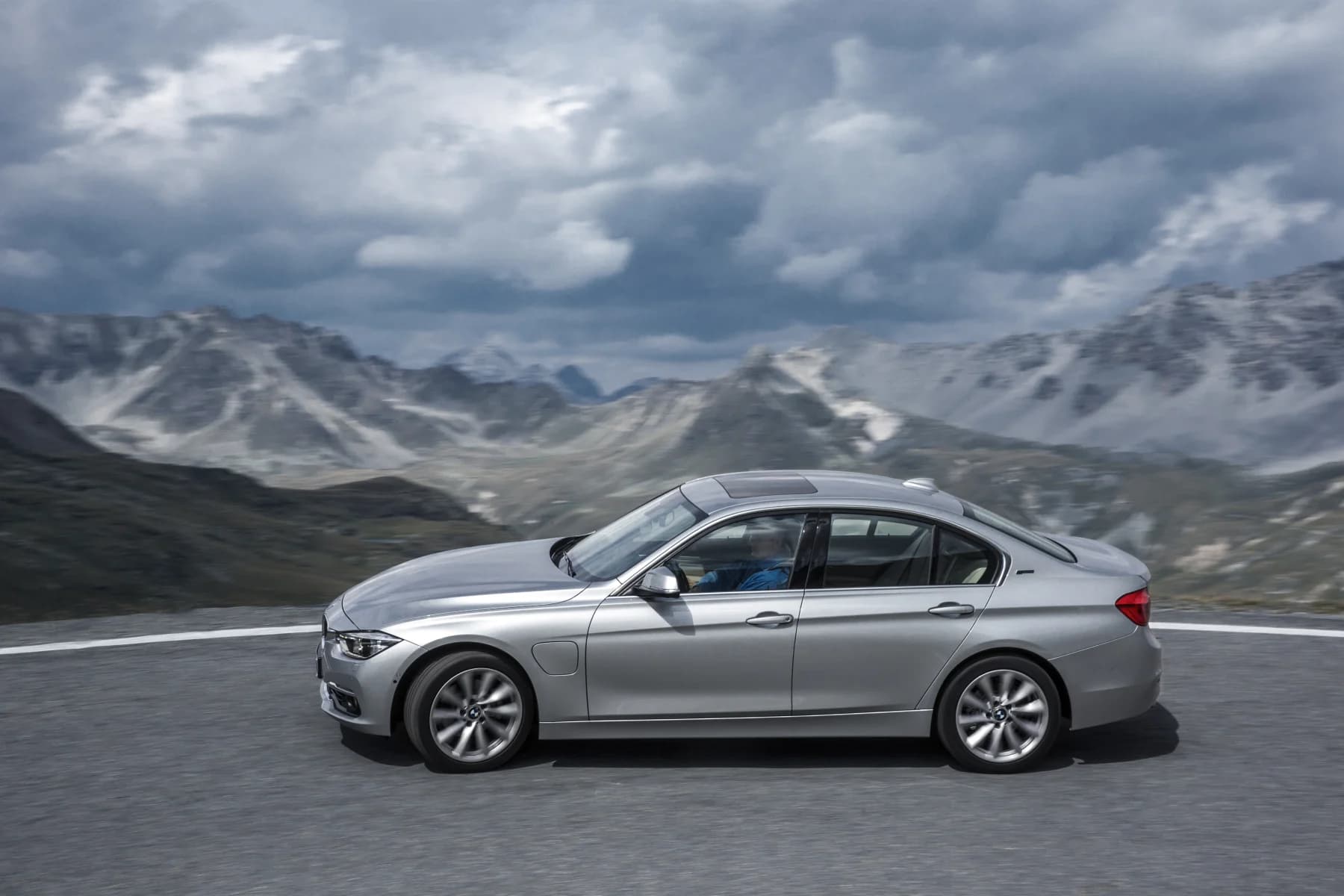
Official BMW Group PressClub / BMW AG image used to illustrate plug-in-hybrid technology. It does not represent an individual vehicle in the Transport & Environment dataset.
PHEVs emit almost as much CO2 as combustion cars in real use, T&E says
Plug-in hybrid vehicles emit far more carbon dioxide in everyday driving than their official WLTP figures suggest, according to an analysis by Transport & Environment. The Brussels-based campaign group says PHEVs registered in 2024 produced roughly six times their type-approval CO2 values on average. In real-world use, T&E says their emissions were only about 14 percent lower than those of conventional combustion and full-hybrid cars, even though official figures suggested an 83 percent reduction.
The finding matters because plug-in hybrids are counted in European fleet calculations through a utility factor. That factor estimates how often a vehicle is expected to drive electrically. If owners charge less often than the official method assumes, a PHEV can look very clean in a manufacturer’s fleet average while using its petrol or diesel engine for much of its actual mileage.
What T&E analysed
Transport & Environment says its work used data collected by the European Environment Agency from on-board fuel consumption monitoring, known as OBFCM. These systems record fuel and energy use in vehicles. Aggregated data makes it possible to compare real-world operation with the values established during type approval.
For cars first registered in 2024, T&E estimates that real-world PHEV emissions were about six times higher than official figures. The group’s earlier analysis put the gap at nearly five times for cars registered in 2023 and about 3.5 times for those registered in 2021. These are fleet averages from an analysis, not emissions readings for every model or every driver.
T&E is an environmental campaign organisation, not an EU regulator. The underlying monitoring data comes from the European system, but the selection of data, calculations and interpretation belong to T&E. Its results should therefore be read alongside the European Commission’s own monitoring work and the legal text governing fleet targets.
The comparison with conventional cars also needs careful wording. T&E says the real-world advantage of PHEVs is much smaller than the official test comparison. That does not mean every charged PHEV performs like a petrol car. It means the average across observed use is affected by how often the cars are plugged in, how they are driven and how the utility factor converts those conditions into an official value.
Why a plug-in hybrid can use more fuel than expected
A PHEV combines a combustion engine, an electric motor and a battery that can be charged from an external source. In a WLTP test, the calculated result combines electric running with operation after the battery’s usable charge has been depleted. The utility factor assigns a share of the distance to electric driving.
The gap appears when a vehicle is not charged regularly. With a full battery, a PHEV can complete part of a journey without tailpipe emissions. With a depleted battery, it still carries the battery and electric hardware but relies more heavily on its engine. Additional mass, high speed, cold weather, traffic, gradients, climate control and driving style can all raise fuel consumption.
Company-car use is relevant to this issue. A PHEV may be selected because its official CO2 value improves taxation or a fleet average. The driver may still lack a reliable home or workplace charger. That does not invalidate the technology for owners who charge every night and use electric power for routine journeys. It does show why an official value cannot be treated as a universal prediction of the next fuel bill.
A bigger electric range did not solve the accounting gap
The T&E report says average electric range rose by about 25 percent between PHEVs registered in 2021 and those registered in 2023. Over the same comparison, the group says real-world emissions increased by about 5 percent, while official WLTP emissions fell by 26 percent.
That comparison does not prove that larger batteries are useless. It shows that a longer declared electric range does not guarantee more frequent electric driving. The owner still needs access to charging, and the daily route must fit the usable range. If those conditions are absent, the laboratory advantage can shrink while the car continues to carry the extra hybrid hardware.
For buyers, the useful questions are not limited to the combined WLTP number. They include the electric range, the fuel consumption with a depleted battery, charging time, charging access and the vehicle’s actual mass. Those questions also matter in the used-car market, where charging history and battery condition may tell a more useful story than a brochure figure.
What the EU proposal changes
The European Union sets fleet-wide CO2 performance standards for new cars and vans. Under the rules adopted for 2035, the current target is a 100 percent reduction in average tailpipe emissions compared with the 2021 baseline. The Commission describes a 55 percent reduction for new passenger cars by 2030 as the intermediate target.
On 16 December 2025, the Commission presented an automotive package and a proposal to amend the CO2 standards. The proposal would set a 90 percent tailpipe reduction target from 2035 and allow the remaining 10 percent to be compensated through low-carbon steel made in the EU or through e-fuels and biofuels. The Commission’s factsheet says plug-in hybrids, range extenders, mild hybrids and internal-combustion vehicles could continue to play a role alongside battery-electric and hydrogen vehicles.
That text is a proposal, not automatically applicable law. It must pass the EU legislative process, and the Council has already debated the target and the proposed flexibilities. The final wording may change. A report about PHEV emissions therefore does not by itself change what manufacturers may sell in Europe after 2035.
The utility factor is the centre of the argument
The Commission has planned updates to PHEV utility factors so that official calculations better reflect actual driving. T&E argues that these corrections should proceed rather than being frozen at a more favourable level for manufacturers. ACEA, representing European vehicle manufacturers, calls for a technology-neutral and workable path that takes market conditions and industrial competitiveness into account.
The dispute affects more than the reputation of one powertrain. The accounting method influences how many battery-electric vehicles a manufacturer needs to sell to reach its fleet average. A PHEV with a very low official value can lower that average even when real-world emissions are much closer to a conventional vehicle’s result.
For drivers, the practical conclusion is straightforward: a PHEV can reduce fuel use when it is charged and used in the right pattern, but the WLTP number should not be read in isolation. For regulators, the question is whether the test and accounting rules capture real operation. For manufacturers, the issue affects product planning, compliance costs and the balance between plug-in hybrids, battery-electric vehicles and combustion models.
Confirmed facts and open questions
It is confirmed that the EU collects real-world data through OBFCM and that this data is being used to examine the gap between test values and road use. It is also clear that T&E estimates a sixfold gap for PHEVs registered in 2024. The impact on an individual brand or model cannot be calculated without the complete dataset and a consistent method.
It is also confirmed that the Commission proposed additional flexibility in December 2025. It is not confirmed that the 90 percent target will become the final legal text. Nor can any individual PHEV be labelled automatically as either clean or polluting without considering charging frequency, route, temperature and driving conditions.