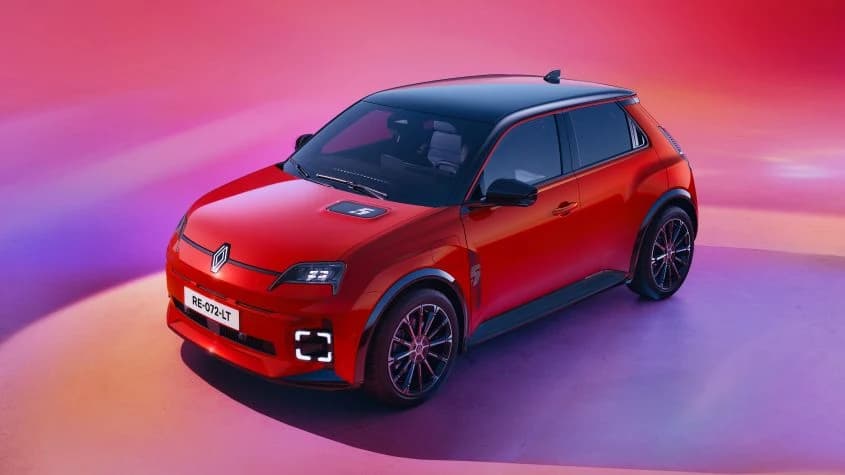
Renault is preparing an update for the electric 5 E-Tech that brings more range, new equipment and a future entry-level version with an LFP battery. The most important change for European customers is the increase in declared range for the variant with the 52 kWh battery: from 410 to 430 km WLTP.
The changes do not mean a larger battery. According to information published by Carscoops, Renault obtained the gain by revising the aerodynamics of the lower body and the mirrors, as well as by optimising the battery electronics.
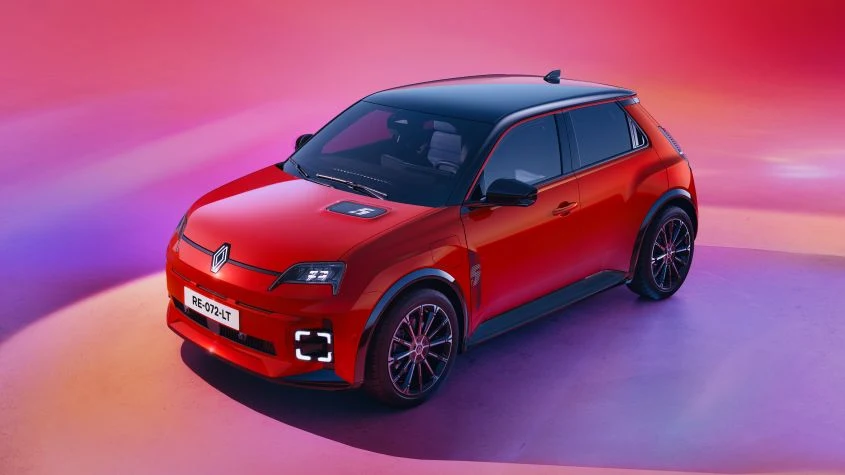
Photo: Renault, image taken from the Auto Express article gallery.
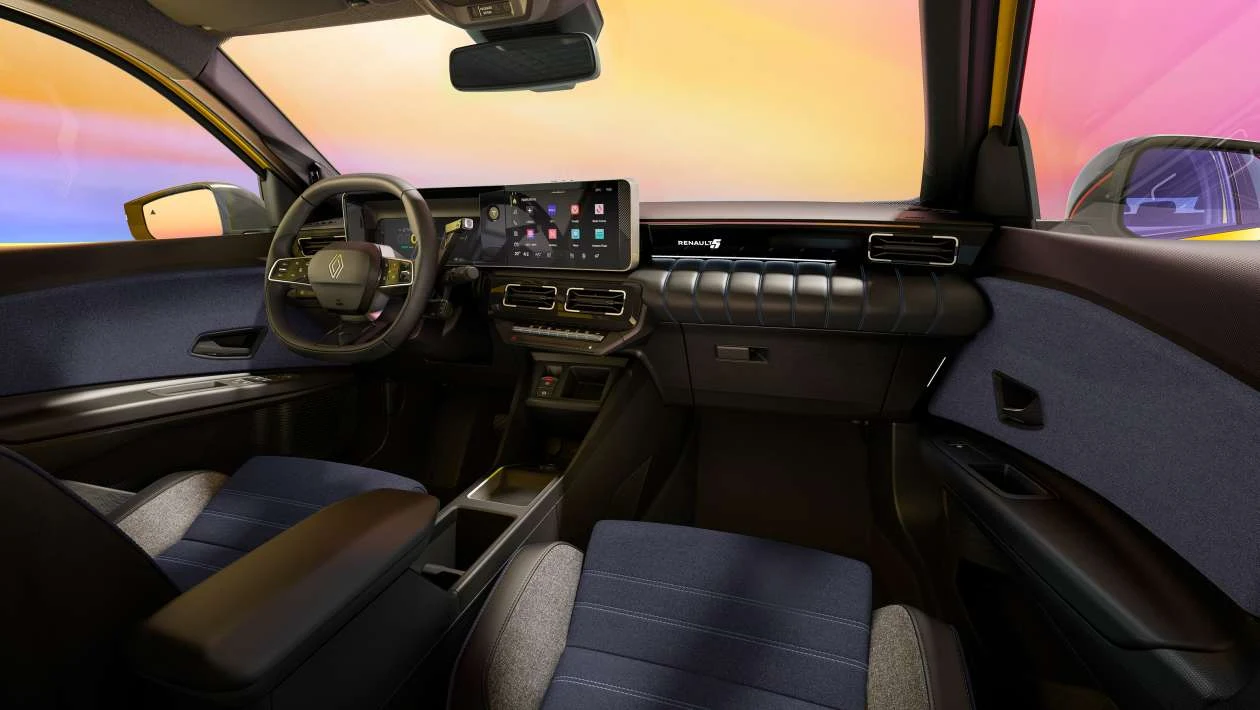
Photo: Renault, image taken from the Auto Express article gallery.
Up to 430 km WLTP for the 52 kWh battery
The update applies to both existing batteries. The Renault 5 E-Tech with the 40 kWh battery rises from 312 to 315 km WLTP, while the 52 kWh version reaches 430 km WLTP. The 20 km difference is the one that matters most for use outside the city, where the larger-battery variant is already the more suitable choice.
For the 2027 range, the Homura and Homura Plus levels are also announced, with elements such as 16-inch RAYS wheels, Brembo brakes, Recaro seats, Bilstein dampers and bracing bars, depending on the version.
A 36.5 kWh LFP battery for the affordable variant
The most important technical novelty will be the base version prepared with a 36.5 kWh LFP battery, taken from the Twingo E-Tech family. It will receive an 80 kW (109 hp) motor and a declared range of 305 km WLTP.
The capacity is smaller than that of the 40 kWh battery offered until now, but Renault will include 80 kW DC rapid charging as standard, together with 6.6 kW AC charging. Current base versions do not have DC charging. The manufacturer has not yet communicated the price or the European markets in which the new LFP configuration will be available.
The update also brings a Smart driving mode, which replaces MySense and switches automatically between Eco, Comfort and Sport, as well as the move from Google Assistant to Gemini through an over-the-air update. Outside, customers will be able to choose Flame Red and, on certain equipment levels, gold wheels that refer to the Renault Clio Williams.
For buyers in Romania, the important figures remain WLTP range of up to 430 km for the 52 kWh battery and the arrival of a base version with LFP and DC charging. Local prices and launch dates for these updates have not been announced.
Image disclaimer: the photograph is published in the Carscoops source article; image rights belong to the original publication and the authors it indicates.
What the update means in daily use
The range increases are modest for the 40 kWh car and more noticeable for the 52 kWh version. A three-kilometre WLTP gain does not change how an Urban Range owner plans a journey, but the extra 20 km claimed for the Comfort Range can provide more flexibility between charging stops. Neither figure should be treated as a guaranteed motorway distance. Cold weather, high speeds, rain, heating and tyre choice can all reduce the distance available in normal driving.
Renault’s aerodynamic changes are deliberately small. The lower body trim and mirror design affect the air flowing around the car, while battery-electronics optimisation can reduce the energy lost between the battery and motor. The company has not published a detailed drag coefficient, a measured consumption table for every trim or an independent test. The official WLTP values are therefore the correct comparison figures, not a promise of identical results in every country.
The new entry version is more than a smaller battery. The 36.5 kWh LFP pack uses cell-to-pack construction and is paired with an 80 kW/110 hp motor. Standard DC charging at up to 80 kW changes the practical ownership calculation because a base car can use rapid chargers rather than relying only on AC charging. Renault has not yet given the exact charging curve or a 10–80 per cent time, so the peak figure should not be confused with a complete charging result.
The software changes also have limits. Smart mode can choose between Eco, Comfort and Sport, but the driver can still select modes manually. Gemini arrives through an over-the-air update and brings more conversational commands, yet Renault has not published a complete list of supported languages or functions for every market. Equipment such as the cooled Qi2 pad and 4G eCall may also depend on trim and market.
European availability and pricing
Renault says orders are open in the European countries where the Renault 5 is sold. That does not mean every version arrives on every market at the same time. The 36.5 kWh LFP Five is still being introduced, and the final price, equipment and launch timing can differ between countries. UK prices quoted by Auto Express are not euro prices and should not be copied into Romanian or continental-market listings.
For a buyer, the choice is now clearer: the 40 kWh battery remains the urban-focused option, the 52 kWh car offers more range for longer trips, and the future LFP Five prioritises a lower entry point with DC charging. The right version depends on local pricing and access to home charging. Renault has not announced a single European price for the updated Five in the official global release.