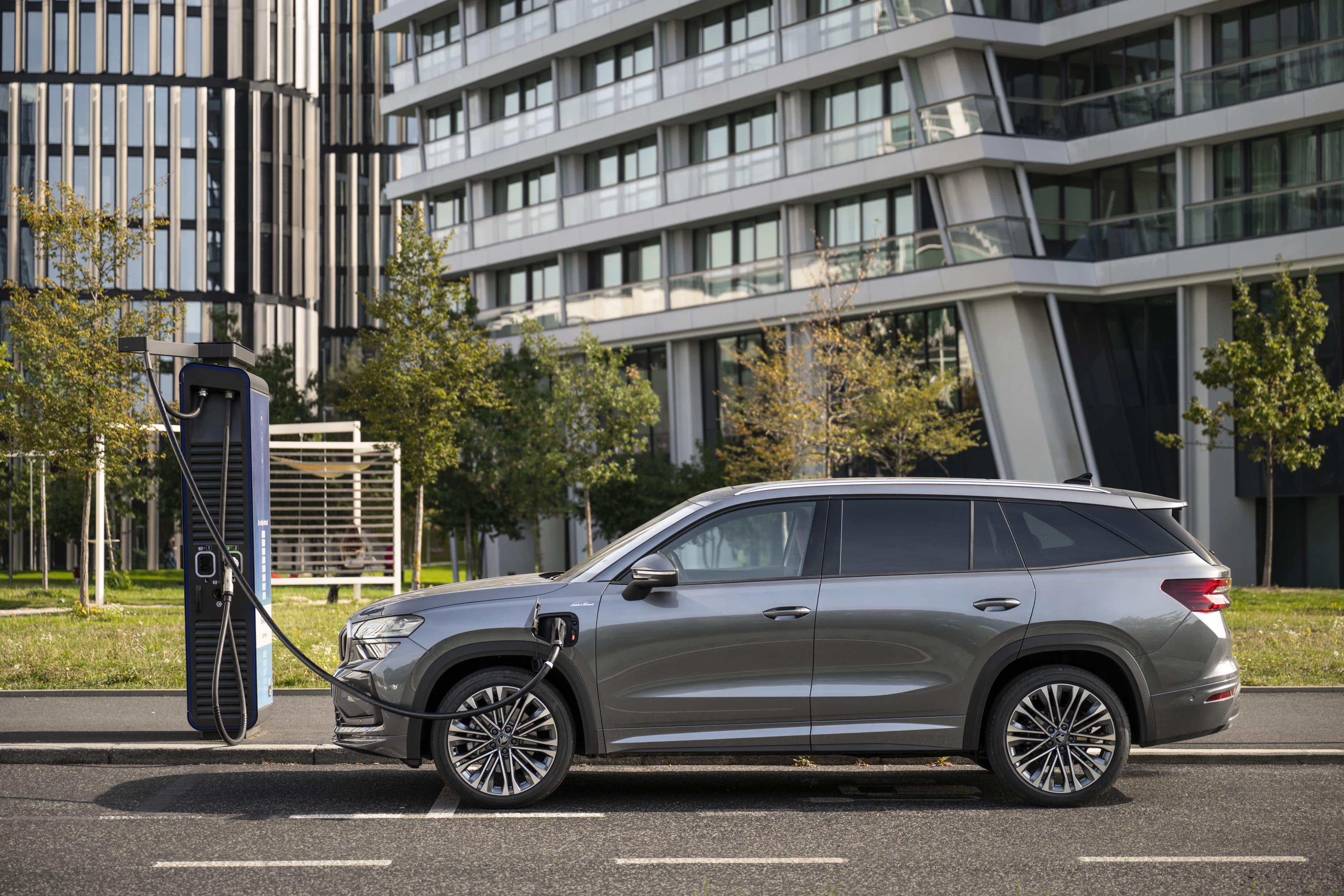
Škoda is expanding the current Kodiaq range with a more powerful plug-in hybrid and a new Laurin & Klement flagship trim. The new Kodiaq iV produces 200 kW, or 272 hp, which is 50 kW more than the 150-kW plug-in hybrid already offered in the line-up.
Škoda Auto announced the changes on 22 October 2026. The international release does not include a Romanian price or a confirmed Romanian order date, so those details should not be assumed from information published for other markets.
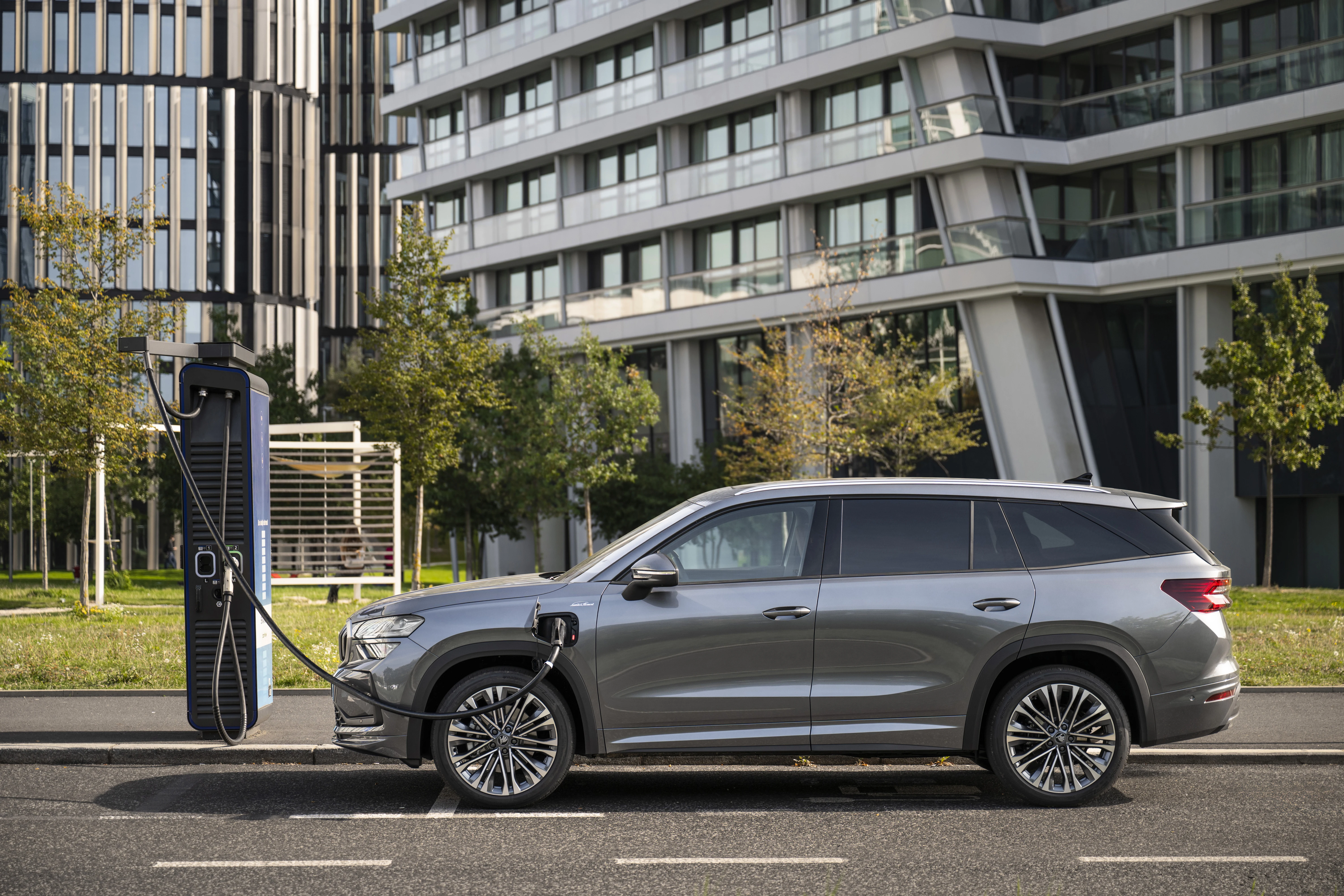
Official Škoda Auto image. Photo: Škoda Auto / Škoda Storyboard. Editorial use is subject to the manufacturer’s media terms.
A 200-kW plug-in hybrid system
The new powertrain combines a four-cylinder 1.5 TSI petrol engine producing 130 kW with an 85-kW electric motor. Škoda says the extra system output comes from changes to the combustion engine and revised software for the powertrain control unit.
The 200-kW version is positioned as a more powerful alternative to the existing 150-kW Kodiaq iV, which remains part of the range. The manufacturer’s announcement states that both plug-in hybrid versions use front-wheel drive. It does not yet publish acceleration, top-speed or kerb-weight figures for the new configuration, so those numbers should not be inferred from the system output alone.
The electric motor draws energy from a battery with a gross capacity of 25.7 kWh and a net capacity of 19.7 kWh. Škoda describes the Kodiaq iV as having an all-electric range of more than 100 kilometres, but the international release does not give a final WLTP number specifically for the new 200-kW version. Actual range will depend on temperature, speed, driving style, terrain and the vehicle’s equipment.
The battery also supports DC charging at up to 50 kW. That adds a capability not normally associated with the short stops many plug-in hybrid owners make, although Škoda has not published an official charging time for the new Kodiaq iV. The real charging rate will depend on the battery’s temperature and state of charge, as well as the output available from the charging station.
What Laurin & Klement changes
Laurin & Klement returns as the range-topping Kodiaq trim and will be available with a choice of powertrains. The equipment list focuses on comfort and trim-specific details. Škoda highlights front seats with a massage function, Laurin & Klement badges and dedicated interior finishes. The company’s wider description of the updated range also lists three-zone climate control, aluminium-finish pedals and a 13-inch infotainment display among the trim’s equipment.
On the outside, the trim uses silver roof rails, body-coloured front and rear bumpers and lower door mouldings. It also gets dedicated alloy-wheel designs. Depending on the market and configuration, the choice includes 19-inch Lefka wheels and 20-inch Venus and Rila designs. Matrix LED headlights and Laurin & Klement badging are part of the equipment described by Škoda.
The name refers to Václav Laurin and Václav Klement, the founders of the company that preceded today’s Škoda brand. Equipment can vary between countries, so the international list is not a substitute for a local price sheet. Škoda has not yet published Romanian prices or confirmed which combinations will be offered by the local importer.
The second-generation Kodiaq
The new versions arrive as the Kodiaq reaches its tenth anniversary. Škoda unveiled the first-generation SUV in Berlin on 1 September 2016, with customer deliveries beginning in spring 2017. The manufacturer says that more than 1.2 million Kodiaq vehicles have reached customers across 70 markets.
The second generation was revealed on 4 October 2023, and series production at Kvasiny started in mid-January 2024. Compared with the first generation, it brings more interior space, Modern Solid design elements and multifunctional Škoda Smart Dials. It also introduced plug-in hybrid power to the Kodiaq range for the first time, initially with 150 kW and an electric range of more than 100 kilometres.
Škoda’s announcement keeps the current 150-kW version in the range while adding the 200-kW model. That means customers may have a choice between a lower-output configuration and a more powerful one, but the price difference, equipment split and market availability remain unknown in Romania. The final WLTP data and official specifications should be checked once the local range is published.
The practical change is therefore clear in the hardware: more system output, a 25.7-kWh gross battery and DC charging at up to 50 kW. The commercial details are not yet complete. Until Škoda releases local prices, order timing and final homologated figures, the new Kodiaq should be described as announced rather than already available to Romanian buyers.