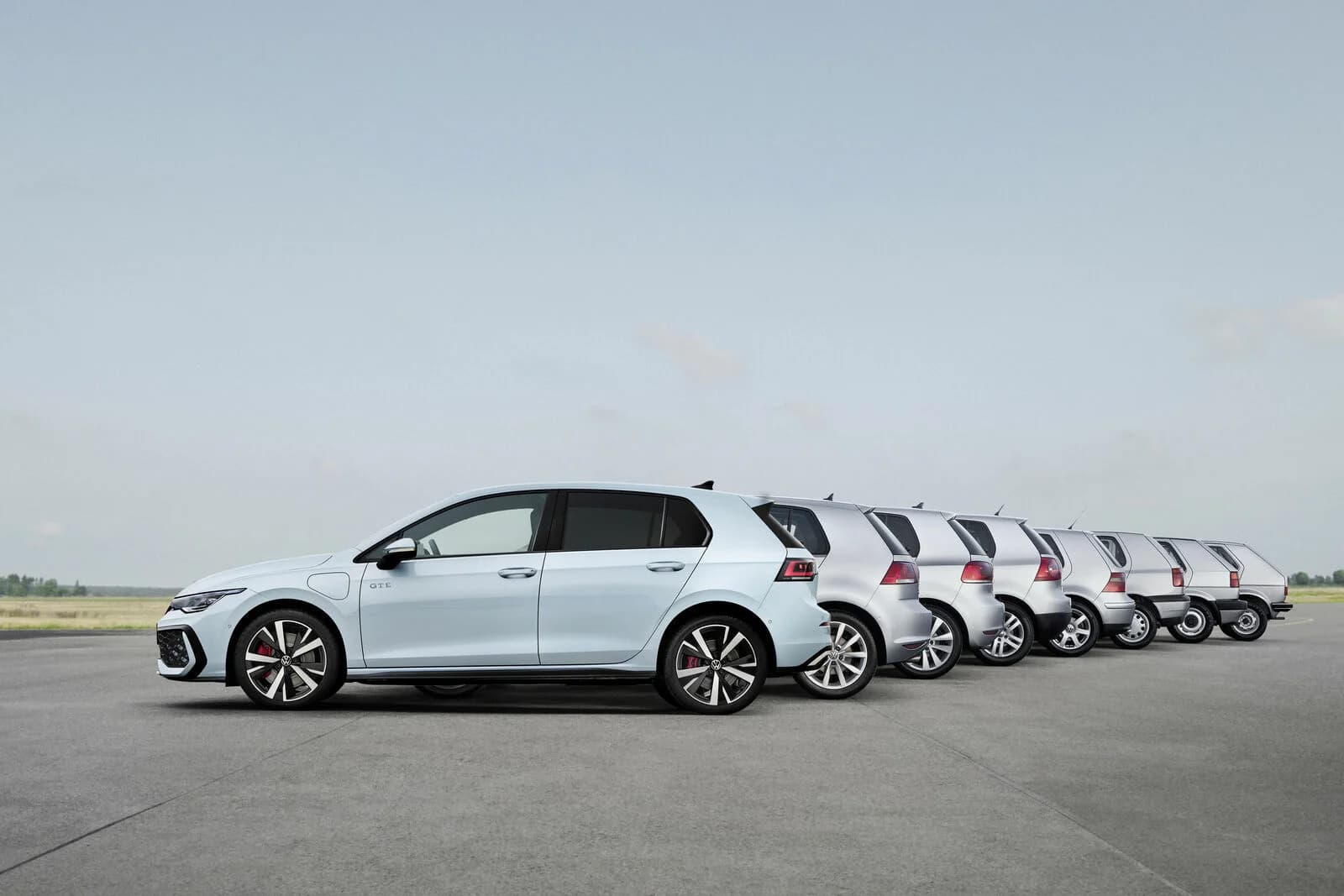
A Volkswagen Golf, one of the model lines named in the German recall. Official Volkswagen AG press image DB2023AU01424, cleared by the company for free editorial use.
VW Group steering recall may cover four million cars
Volkswagen Group is facing a steering-related recall reported to cover around four million vehicles across Volkswagen, Audi, Skoda and Seat. A mounting bolt securing the steering rack to the front subframe can corrode and break; in the most serious case, the steering-rack housing may fail and the driver could lose steering control.
The four-million figure comes from German business newspaper Handelsblatt and was reported by Reuters. It should not be read as one final regulator-published total. Germany's Federal Motor Transport Authority, the KBA, currently gives distinct figures for several campaigns: 2,159,054 Volkswagen vehicles, 696,547 Audis and 66,224 Seats worldwide. Handelsblatt reported more than one million Skodas, but Skoda had not immediately confirmed that number when Reuters sought comment.
The models identified by the German regulator
KBA reference 17016R covers Volkswagen Golf, Golf Variant, Tiguan, Touran and Caddy vehicles produced from 24 September 2013 to 1 July 2024. Volkswagen identifies the action as campaign 48VS. The broad date window defines the population under investigation; it does not mean every example built during those years is affected.
Audi's related entry is KBA reference 17014R. It names the Q3 produced from 31 October 2017 to 23 May 2024 and lists 696,547 potentially affected vehicles worldwide, including 58,555 in Germany.
For Seat, KBA reference 17017R lists the Ateca and Tarraco built between April 2016 and September 2024. The German database records 66,224 vehicles globally and 43,574 in Germany. Reuters separately said Seat confirmed more than 200,000 vehicles in the group's broader action. That difference may reflect the scope or timing of separate market records, and it is a reason not to use a headline total as a VIN-level answer.
Skoda's individual models and production dates were not set out in an official brand statement available when this article was prepared. The reported group total therefore remains partly dependent on Handelsblatt's information rather than a consolidated notice from Volkswagen Group.
What can fail in the steering assembly
The part at issue is a bolt joining the steering rack to the front subframe. Moisture and road salt can reach the fastener and cause corrosion over years of use. If the bolt fractures, loads on the steering-rack housing can cause that housing to break. The resulting movement can interrupt the rigid connection needed to translate steering-wheel input into a change in front-wheel direction.
US recall 26V590 provides a detailed official description of the same failure mode for a narrower North American population. It covers 208,724 vehicles: selected 2018 Volkswagen Tiguan, 2018-2019 Atlas and 2019-2021 Audi Q3 models. The National Highway Traffic Safety Administration says the bolt may corrode and break, the steering-rack housing can then fracture, and loss of steering control raises the risk of a crash.
The US and European vehicle lists are not interchangeable. Atlas is part of the American campaign, while the KBA entry includes Golf, Golf Variant, Touran and Caddy. NHTSA's report helps establish the component, hazard and remedy, but it does not decide whether a European-market car is included.
The repair is a new corrosion-resistant bolt
The remedy is to replace the right-side steering-rack mounting bolt with a more corrosion-resistant part. Volkswagen told Reuters that the campaign is precautionary and that replacing the fastener should take no more than one hour. Recall repairs are performed without charge for vehicles confirmed within the campaign.
The KBA record reported no known incidents involving property damage or personal injury when the European action became public. That is not the same as saying the component cannot fail. The authority's risk description is steering failure following bolt fracture, which is why the repair is being organised as a safety recall.
In the United States, Volkswagen uses campaign codes 48LG and 48VT. NHTSA says owner letters are expected to be mailed from 10 November 2026, while affected VINs became searchable on 16 September. Those dates only apply to the US action; notification schedules and parts availability can differ by country.
Owners need a VIN check, not a model-year guess
A model name and production range are useful screening information, but the 17-character vehicle identification number is the decisive check. It appears on registration documents and can normally be read through the lower edge of the windscreen. Volkswagen, Audi, Skoda and Seat dealers can search open campaigns against that number.
Owners should not assume their car is included simply because it is a 2018 Golf or a 2021 Q3. Vehicle configuration, production date, factory records and the fitted component can narrow a campaign. The reverse also matters: an early negative result may need checking again if a national importer is still loading VINs into its system.
Volkswagen's official recall lookup advises owners to complete safety recalls without delay and to contact an authorised dealer. Skoda also provides an official recall-campaign checker. Market-specific tools are preferable to entering a European VIN in a US database, which may legitimately return no result for a car that is being handled under another national campaign.
There is no blanket “do not drive” order attached to the US campaign, and Volkswagen has described the wider action as precautionary. Nevertheless, unusual front-end knocking while steering, detectable play, a sudden change in steering effort or a steering warning should not be ignored. A driver experiencing those symptoms should stop using the car and ask an authorised workshop or roadside-assistance service how it should be transported and inspected.
The practical distinction is straightforward. An owner with no symptoms should verify the VIN and arrange the free repair when instructed. An owner who can feel or hear a steering fault should treat it as an immediate mechanical problem rather than wait for a recall letter.
Sources
- KBA dataset listing through Germany's official GovData portal
- NHTSA — official US campaign 26V590
- Volkswagen — official VIN recall and service-campaign lookup
- Skoda — official recall-campaign lookup
- Volkswagen Newsroom — Golf image and editorial-use terms
- Reuters via Euronext — reported four-million-vehicle group total